Document workshops run by the Northamptonshire Record Society
Would you like to meet some earlier inhabitants of your village through the documents they left behind? Are you a keen local historian who would like to make greater use of the wealth of documents held in the Northamptonshire Archives?
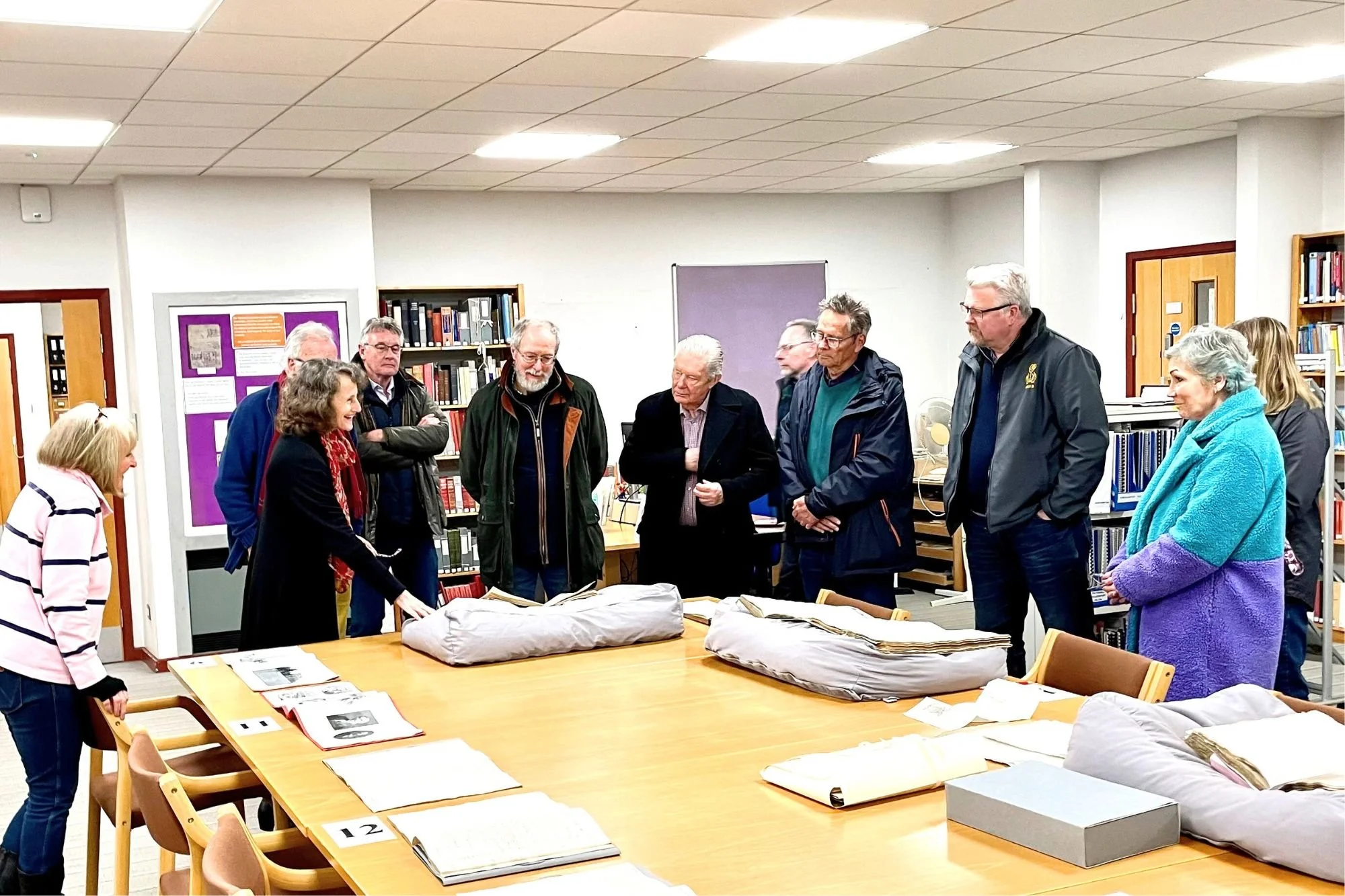
The Northamptonshire Record Society’s (NRS) series of workshops continues in autumn 2026, with further sessions taking place in the NRS Library at Northamptonshire Archives, Wootton Hall Park, Northampton NN4 8BQ. As before, the workshops will showcase and explain some of the records that shed light on earlier periods and enable a fuller understanding of the lives of our forebears.
Price: £10 per person. A charge is necessary as the NRS now has to pay the Archives service for its support.
Format
10am – Introduction and explanation in the Northamptonshire Record Society Library at the Record Office
11am – Coffee and biscuits
11.15am – Original documents on display and available, with help, in the search room
Saturday 3 October 2026 – Deborah Hayter: 18th-century Poor Law and settlement records
Last time, we looked at how the Old Poor Law worked in the 17th century, with each parish being responsible for its own poor and raising the funds to support them. The pressures on the system grew through the 18th century as the population became more mobile. This produced a raft of fascinating documentation as parishes tried to establish who belonged to which parish.
There will be lots of documents to look at in the archives.
Deborah Hayter has an MA from the University of Leicester and has taught courses in Local and Landscape History for Oxford University for the last 20 years.
Saturday 7 November 2026 – Dr Wendy Raybould: Probate inventories – hearth and home
Understanding how domestic spaces were arranged in pre-enclosure Northamptonshire homes can provide insights into later alterations and developments.
Probate inventories offer a unique snapshot of the rooms, furnishings and equipment that a 17th- or 18th-century small farmer, craftsman or businessman (or woman) might have owned at their death, and how those things were valued.
In this workshop, a variety of inventories will be used, in transcription or as copies of originals, to demonstrate the value of this source material in reconstructing floorplans and the details of daily life.
Wendy Raybould has an MA in English Local History and a PhD in Industrial Archaeology, both from Leicester. She taught local history adult education classes in the 1980s and 1990s around north-west Northamptonshire.
Saturday 5 December 2026 – Deborah Hayter: Helping historians to read 17th-century documents
Many local historians feel frustrated when faced with difficult handwriting in what are obviously fascinating documents. One session is not long enough to cover everything, but we will aim to give you some clues and pointers to make it easier to read and understand original sources.
In the 17th century, handwriting begins to be more recognisable to the modern eye, making this a good place to start.
Saturday 6 February 2027 – John Hall: The history of health care in Northamptonshire
Full details of this workshop to come.
Wednesday 17 March 2027 – Bill Franklin: An introduction to GIS mapping for historians
A one-day introduction for historians on using Geographic Information System (GIS) software as part of historical research.
GIS mapping is a powerful way to make history come to life. The course will instruct participants in how to use QGIS (originally Quantum GIS), a free GIS software package. This includes learning how to create a database behind maps on screen to present historical evidence in its precise geographical context, and how to georeference photographs of old maps from sources such as the archives so they can be viewed on modern maps, allowing geographic changes over time to be shown visually.
Visually illustrating change over time in this way is especially helpful when trying to convey complex information. As historians, you will gather information that documents a range of activities that happened in a specific place over time. Describing these documentary findings in a traditional narrative can be cumbersome and can obscure important points. By linking this information to the relevant geographical features, we can “show” not just “tell” what happened, where and when.
Participants will need to bring their own laptop, as this is a practical course. The best way to learn how to use a software package is through experience. Participants will also be required to undertake some pre-course preparation and will receive course notes and copies of the example files used during the course.
William (Bill) Franklin is a historian who researches landscapes and local histories and has been using GIS mapping in his historical research for over 15 years.
Saturday 3 April 2027 – David Waller: Northamptonshire’s industries
Northamptonshire has a long history as an industrial, as well as agricultural and commercial, county, beginning in the Roman period. Beyond the familiar story of the boot and shoe industry, it has been marked by activities such as mineral extraction, iron and steel production and, in terms of transport, canals and railways.
In the 20th century, various types of engineering became more important as the shoe industry declined. This workshop will look at a variety of records available to us locally.
David Waller teaches American Studies at the University of Northampton, is chair of the Northampton Branch of the Historical Association and is a committee member of the Northamptonshire Industrial Archaeology Group.
How to book
Advance booking is essential. Please book your place by emailing [email protected]. These workshops have proved popular and numbers are limited.